Showing posts with label Unscented reviews. Show all posts

Thursday, February 4, 2021

Pandemic dogs and an author interview


I've spent the pandemic year locked down with my 3 dogs, and let's just say it's been a mixed experience. I love my dogs, there's no doubt. It's hard to imagine life without them and even harder to imagine surviving this lonely year in dogless house. But having three hyper canines underfoot all day every day turns out to be ... a bit much. 

I thought my being here all the time might soften Dudley and Katie's velcro tendencies. Surely a human you have access to 24/7 loses some of her novelty, right? But it turns out, no — a round-the-clock human is endlessly fascinating. Even little Pixie, who's always been by far the least people-focused of the three, has decided that she needs to monitor my every move. I can't pour a cup of coffee or empty the dryer or take out the trash without the entire pack's supervision and assistance. Just getting out of bed in the morning spurs a wild doggy orgy of celebration — barking, leaping, dancing. She is risen.

I'm sure this is mostly my fault for handing out too many treats, rewarding their constant attention with attention of my own. Did I mention that it's been a lonely year? And the good news is that for all their overwrought attachment, none shows any sign of developing separation anxiety. On the rare occasions when I leave the house, they just go to their beds and sleep — storing up energy for my return. The welcoming festivities are, needless to say, intense. At least I never feel forgotten.

This year of effectively sharing a cage with dogs has me pondering the human-animal relationship even more than I usually do, so I was eager to dive into Colin Dayan's new book, Animal Quintet, and to ask her a few questions for today's Q&A at Chapter 16.  Relationships — mother/child, human/animal, black/white, living/dead — are at the core of all the pieces in the collection, and Colin Dayan is always unsparing in her depiction of the harm we inflict on the Other. But the stories she tells are also driven by a passion for understanding the wild beauty of experience. (You can read my review of her 2016 book With Dogs at the Edge of Life here.)

***

*1912 photo from the Library of Congress. From the record: Photo shows Walter W. Johnson, a mining engineer and designer of gold and tin dredges, who traveled around the Seward Peninsula on the family "pupmobile" and on horseback. Johnson wrote on the back of his copy of the photo, "When it was time to coast, the dogs would jump aboard without command."

**Dudley and Katie displaying their constant faith that if you sit, a treat will come. Pixie's more of a skeptic.


Monday, September 18, 2017

Books, Art, etc.

I long ago fell out of the habit of posting my book reviews here, but I just took a notion to link to some recent ones and accompany them with a little vaguely related art I like. (You'll find some links amongst the images, too.) Cheers.


Franz Marc, The Fox 1913


Bruno Liljefors (1860-1939), Fox and Black Grouse


***


John Biggers, Shotgun, Third Ward #1, 1966


Yoshey Horishito, cover art for The Great Gatsby, 2014


*I found this painting by LWW posted all over the web, but the only title I found attributed to it was "self portrait," and that strikes me as doubtful. If anyone knows the subject of the painting, please tell me.


***


Joseph Wright of Derby, Virgil's Tomb by Moonlight with Silius Italicus Declaiming, 1779

Monday, December 21, 2015

A little something for the Solstice


Last week I went book shopping with friends and came upon a copy of W.H. Auden's A Certain World, which is a "commonplace book" — that is, a personal collection of quotations, notes, observations, etc. Auden describes A Certain World as a kind of autobiography, though I can't say I gleaned any sense of him from it that can't be found in his poems. It is a lovely assemblage of stuff, though, and I was especially moved by an excerpt from a Loren Eiseley essay, "The Judgment of the Birds." The essay has been widely circulated, but I'd never encountered it before, and in any case it strikes me as a piece well worth revisiting, especially at this darkest moment of the year.

Here is a portion of the bit Auden quotes, which describes the reaction of songbirds to a raven preying on one of their nestlings:

No one dared to attack the raven. But they cried there in some instinctive common misery, the bereaved and the unbereaved. The glade filled with their soft rustling and their cries. They fluttered as though to point their wings at the murderer. There was a dim intangible ethic he had violated, that they knew. He was a bird of death.

And he, the murderer, the black bird at the heart of life, sat on there, glistening in the common light, formidable, unmoving, unperturbed, untouchable.

The sighing died. It was then I saw the judgment. It was the judgment of life against death. I will never see it again so forcefully presented. I will never hear it again in notes so tragically prolonged. For in the midst of protest, they forgot the violence. There, in that clearing, the crystal note of a song sparrow lifted hesitantly in the hush. And finally, after painful fluttering, another took the song, and then another, the song passing from one bird to another, doubtfully at first, as though some evil thing were being slowly forgotten. Till suddenly they took heart and sang from many throats joyously together as birds are known to sing. They sang because life is sweet and sunlight beautiful. They sang under the brooding shadow of the raven. In simple truth they had forgotten the raven, for they were the singers of life, and not of death.

That little passage is beautiful and stirring, but the complete essay is something deeper. It touches the mysteries of consciousness as gracefully as anything I've ever read. You can download it at the link below:

The Judgment of the Birds by Loren Eiseley

"The Judgment of the Birds" is included in Eiseley's book The Immense Journey.

Photo by BitterGrace

Tuesday, June 17, 2014

A summer book or two


I have been letting the blog languish for ages now, and I think it's about time that ended. I'll have a new post — a real post by yours truly, I mean, not just a poem & pic — up as soon as possible. Meanwhile, here are links to a few of my recent reviews and interviews, in case you're in search of a summer book or two.

For the 'fume heads, there's Barbara Herman's Scent & Subversion, a gorgeous, witty, sexy guide to the world of vintage perfumery.

If you love short stories, check out my interview with Madison Smartt Bell about his collection, Zig Zag Wanderer, recently out from the innovative Concord Free Press. Bell is one of our best writers, and his short fiction is not to be missed.

Speaking of short stories, no one has ever written them better than Elizabeth Spencer, and her new collection, Starting Over, is as fine as any she has published. Spencer, at age 92, was the recipient of this year's Rea Award — well-deserved and long overdue.

Amy Greene's new novel, Long Man, is simply a wonderful read. Greene is an awesomely talented writer, and this second book from her left me looking forward to a third.

Finally, I've been telling everyone who will listen about Patrick O'Keeffe's novel, The Visitors. The story is moving and the writing is exquisite. If you love real, grown-up fiction, this is your book.


 Marie-Madeleine au désert, Emmanuel Benner, 1886

Monday, January 23, 2012

"Whole and alive, like an untorn language"


What explains poetry is that life is hard
But better than the alternatives,
The no and the nothing. Look at this light
And color, a splash of brilliant yellow

Punctuating an emerald text, white swans
And mottled brown ducks floating quietly along
Whole and alive, like an untorn language
That lacks nothing, that excludes

Nothing. Period. Don’t you think
It is our business to defend it
Even the day our masters start a war?
To defend the day we see the daffodils?


From "Daffodils" by Alicia Ostriker. The complete poem is here.


I recently did a Q&A with Ostriker for Chapter 16. She's a brilliant writer, with interesting things to say about religion, poetry and politics. You can read the interview here.


Photo by BitterGrace. Share freely.

Sunday, December 18, 2011

A random list, 2011 ed. (mostly books)


'Tis the time of year to make annual lists -- best of, top ten, etc. -- and you'll find mine below. But first, a disclaimer: I’m not a big fan of these lists, or to put it more accurately, I'm not a big fan of creating them. I enjoy other people’s lists (like these, for instance), but when I try to make my own I find that I don’t relish the linear thought process required. I'm not the kind of person who wants or needs her ducks in a row, as even a brief look around my house will confirm. Also, I don’t like the exclusionary nature of lists: This always implies not that, and I hate to reject things that are essentially worthy. (That’s why I possess several hundred perfumes, even though I only wear about 20.) But if I cast aside all thoughts of organization and ranking, list-making does offer me the simple pleasure of revisiting good things, especially the ones that have taught me something or otherwise rocked my world. And, more importantly, a list is a handy way to share those things with people who might not otherwise know about them. Seen in that light, an annual list is a sort of gift to myself and to you. So, with a little ambivalence and a sincere hope that you'll find something that gives you pleasure, here's a random list of  ten things I loved in 2011:

1. Frederick Busch’s Domestic Particulars: A Family Chronicle
This is a quiet, sad, beautifully constructed novel about parents and children, among other things. I wrote a brief review of it at Goodreads. I would never have read it if a friend had not urged it on me. Let me pay a favor forward and encourage you to get your hands on a copy. You'll be rewarded for the trouble.

2. Rodney Crowell’s memoir Chinaberry Sidewalks
This is absolutely not a book I would ever have picked up on my own, but I enjoyed every page. My review is here.

3. Ann Beattie’s Mrs. Nixon: A Novelist Imagines a Life
One of the most interesting and entertaining books I’ve read in a long time, Mrs. Nixon transcends genre. It's an artful blend of fiction, literary criticism, history and memoir, and reading it is a little like being happily lost in a house of mirrors. The book is not really concerned with Pat Nixon, but with “Mrs. Nixon,” a fictional person who is as much the creation of Pat Nixon as of Ann Beattie. The brilliance of Mrs. Nixon was completely lost on David Greenberg, who wrote a simple-minded, lukewarm review for The New York Times, and on Michiko Kakutani, who delivered a review that is so willfully dumb and mean-spirited I won’t even link to it. At least the book is getting some appreciation from smart readers like this one.

4. The Selected Poems of Osip Mandelstam, trans. by Clarence Brown and W.S. Merwin
 Mandelstam’s poems push me to a place I could never get to on my own, and I can never find my way back without their help.

5. Before the Great Troubling by Corey Mesler
 I featured the title poem on the blog a while back, but the whole collection is wise, playful, and very smart. Go here to see some links to other recent poems by Mesler.

6. Some other good books I read or reread this year, in no particular order and excluding lots of worthy titles that I would list if I wasn’t afraid of trying your patience:

So Long, See You Tomorrow by William Maxwell

A Hole in the Earth by Robert Bausch

Brill Among the Ruins by Vance Bourjaily

The House on Fortune Street by Margot Livesey

1982, Janine by Alasdair Gray

The Rings of Saturn by W.G. Sebald

Appalachee Red by Raymond Andrews

Rebel Powers by Richard Bausch


7. Werner Herzog's Cave of Forgotten Dreams
Apart from the way 3D glasses kept falling down my face, watching this film was a magical experience. Herzog, once again, has inspired me to do plenty of wondering about the primal sources of art and about our complex relationship to animals. I won't bore you with my musings, but the film strengthened my long held opinion that our sentimental attachment to our pets is a degraded expression of our deepest, most spiritual selves.

8. Brian Pera's Woman's Picture
Like many of my fellow perfume fanatics, I've been following the production of this film, and I was thrilled to finally see it at the Indie Memphis festival earlier this fall. A beautiful movie in every way, I hope it will be available on DVD soon so that more people can have the chance to see it. And I can't wait to see where Brian Pera takes his considerable talent in the years to come.

9. Susan Bryant's alternative process photography, exhibited this fall at Nashville's Cumberland Gallery
That's one of her images at the top of this post, and you can see more here and here. Wonderful, evocative stuff. Go look.

10. Glasgow in spring
I spent a couple of weeks in Glasgow this year and pretty much fell in love with a city I already liked quite a lot. I have thoughts of making it home someday. To see a few pictures from my visit, go here.


F.A.R., Copyright ©2011 by Susan Bryant. Used with permission. All rights reserved.

Monday, September 26, 2011

"in between one eye blink and the next"


And fleetingly it seemed to him
That in between one eye blink and the next
Time paused, allowing time to be installed
Within that countless interim,
Coiled up, on hold,
A memory predicted and recalled.
Now, that weak muscle flexed,
All that contained him started to unfold

In front of him, a moving book
In three dimensions he could wander through,
At will, at any point, now, since, before,
To feel, to listen and to look—
A house, or suite
Of rooms around a circling corridor,
And waiting there, he knew,
Were all the peopled days he’d not repeat.

Form "The House of Time" by Stephen Edgar. Complete poem is here.

Der Kaktusliebhaber, Carl Spitzweg, c.1850

*After many weeks away, I seem to be making regular posts again. My thanks to everybody who hung around to welcome me back. It's a pleasure to go searching again for words and images to share with you. Not sure where all the time went while I was away from here. A lot of it was spent reading and writing. I've read some gorgeous books in the past few months, including Appalachee Red by Raymond Andrews, Mr. Field's Daughter and Rebel Powers by Richard Bausch, Mr. Sammler's Planet by Saul Bellow, and the new Lydia Davis translation of Madame Bovary. Kevin Wilson's new novel, The Family Fang, is smart and great fun -- I reviewed it here. As for the writing, I've been lucky enough to devote more of my work time to fiction, and I spent two weeks at the Sewanee Writers' Conference. I wrote a little essay about that for Chapter 16.

For longtime readers who don't keep in touch with me via Facebook, I'm sad to report that Kobi, the Big Yellow Ball of Crazy, died in August. Kobi was the most troubled and troublesome of my dogs, and the one that loved me best, so of course she was my favorite. I always said she would wind up breaking my heart and she did. I miss her.

Finally, an apology for my poor housekeeping. I have neglected the blog so thoroughly for the past few months that I just now discovered that some Blogger spasm (probably that huge hissy fit last spring) tweaked the template just enough to knock a bunch of the past year's posts slightly askew. Urgh. They are still readable, but we are all about the pretty here at BitterGrace Notes and misaligned text is intolerable. I'll eventually fix all the posts so that those of you who like to scroll through, say, the Gallery of Antique Smut will find nothing to offend your eyes.

Monday, May 2, 2011

The Color of Night, among other things


I am a little shocked to see that it has been almost a month since my last post. In spite of my good intentions I seem to keep wandering away from the blog. I've been literally wandering, in fact, which is one of the reasons I've neglected BitterGrace Notes. At the moment, I'm sitting in a nice little hotel in Glasgow, not far from Kelvingrove. Glasgow is beautiful now, sunny and reasonably warm, flowers in bloom everywhere--quite different from my last visit in gloomy, cold December. This is a great city in any season, though. Since I arrived last week, there have been two great global media frenzies (the Will & Kate nuptials and the assassination of Osama bin Laden), both of which seem to have left Glaswegians completely unmoved. I love that.
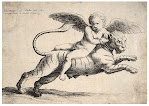
Before I hopped across the Atlantic, I spent a few days in Chattanooga, covering the Conference on Southern Literature for Chapter 16. (My posts are here, here and here.) It's a great conference, very small and friendly, and features members of the Fellowship of Southern Writers. Wendell Berry, Allan Gurganus, Dorothy Allison, Ann Patchett and Natasha Trethewey were just a few of the names on the line-up. It's held every 2 years, and any Southern lit fan should attend at least once. Mark your calendars for 2013.

The panther-wielding maenad who adorns this post is there in honor of a new novel by one of the writers featured at the conference, Madison Smartt Bell. I interviewed Bell about The Color of Night back in February, and now that the book's out I've written a review. (You gotta read at least one to find out what maenads have to do with it.) I can't recommend Bell's brilliant little book highly enough. It'll scare you and make you think, not necessarily in that order.


Furious maenad, 490-480 BCE

Friday, April 1, 2011

Joyce Carol Oates, Richard Bausch, et al.


I just realized that I have a couple of recent interviews up at Chapter 16 that I’ve failed to mention here – one with Joyce Carol Oates, and another with Richard Bausch. Bausch has some interesting things to say about the writing process and the "Southern writer" issue, and Oates discusses her new memoir. You’ll find lots of other good recent stuff on the site, including an essay by Amy Greene (author of Bloodroot), and interviews with Bobbie Ann Mason, Yann Martel and Tom Perrotta. Please click here to see it all.

By the way, when I say please click, I mean PLEASE click. Chapter 16 is a non-profit that relies on grants and donors to keep going (and pay writers). The folks who shell out the money like to see evidence of readers, so think of every click as a vote against the guillotine for our little project. We thank you.

Beggars at the Door, Rembrandt, 1648

Tuesday, February 22, 2011

The Color of Night


Madison Smartt Bell has a new novel coming out in April, The Color of Night, which is a remarkable meditation on the nature of violence and suffering. Not that the book is quietly meditative; on the contrary, it's a fever dream, full of bloodlust and death. The protagonist is a woman -- a profoundly damaged, frightening woman. The novel is beautifully written, brilliant and disturbing. I've read my galley copy twice and can't wait to see what kind of reception it gets. I did a Q&A with Bell about the book, which you can read here, and you'll find a lengthy excerpt here.

Orpheus has a sort of recurring bit part in the novel, hence the painting above and today's choice of poem, one of my favorites by Mark Strand. (Do go and read the whole thing.)

... it came
As things come that will perish, to be seen or heard
Awhile, like the coating of frost or the movement
Of wind, and then no more; it came in the middle of sleep
Like a door to the infinite, and, circled by flame,
Came again at the moment of waking, and, sometimes,
Remote and small, it came as a vision with trees
By a weaving stream, brushing the bank
With their violet shade, with somebody’s limbs
Scattered among the matted, mildewed leaves nearby,
With his severed head rolling under the waves,
Breaking the shifting columns of light into a swirl
Of slivers and flecks; it came in a language
Untouched by pity, in lines, lavish and dark,
Where death is reborn and sent into the world as a gift...


From "Orpheus Alone" by Mark Strand. The complete poem is here.

Death of Orpheus, Emil Levy, 1866

Wednesday, February 16, 2011

Mark Jarman, et al.


As usual, I give you a reader painting to accompany a new Chapter 16 post. Something about this red-haired girl makes me want to look at her for hours, but I encourage you to leave her and go read my interview with poet Mark Jarman. He has interesting things to say about his work and about the impact of digital media on poetry. He also talks about Robinson Jeffers, a poet who has been featured on this blog many times.

Other recent pieces on the site include Susannah Felts's Q&A with writer Kevin Wilson and a review from Ed Tarkington of The Illumination, a new novel by Kevin Brockmeier.

Here's snippet of Jarman's poem "Coyotes." You'll find a link to the complete poem at the interview:

Is this world truly fallen? They say no.
For there's the new moon, there's the Milky Way,
There's the rattler with a wren's egg in its mouth,
And there's the panting rabbit they will eat.
They sing their wild hymn on the dark slope,
Reading the stars like notes of hilarious music.
Is this a fallen world? How could it be?


Young girl reading, Federigo Zandomeneghi (1841-1917)

Tuesday, October 26, 2010

For a discussion of environmental ethics...


...and a lot of other things, mostly not including literature, click here to read my interview with Margaret Atwood. And when you're done with that (or with deciding to skip it), please cruise around Chapter 16 for all the other good stuff there — for example, Ed Tarkington's review of Crooked Letter, Crooked Letter by Tom Franklin, and Charlotte Pence's Q&A with Marge Piercy.


Lake with Dead Trees (Catskill), Thomas Cole, 1825

(Cole's painting seemed fitting to Atwood's discussion of the environment, and the post-apocalyptic settings of her speculative fiction. Cole's aesthetic seems very much in sync with Atwood's generally, I think. You can see a bunch more of his work here.)

Monday, October 25, 2010

Peacock, Manguel, Boldini...


Apologies for being so scattershot with my posts in recent days. Life is a full-time job lately. Since I've been away so much, I thought I'd do a multipurpose post that hits all my usual topics. Here I give you:

1. Antique smut — Reclining nude, Giovanni Boldini (1842-1931)

2. A link to my last piece at Chapter 16 — My interview with poet Molly Peacock is online here.

3. A mention of perfume — Since there were only a few people interested in the Enigma draw, you can all have a sample. Lisa BTB, Margi, and StellaP, please email me your addresses!

4. Something of interest off-blog — Here's a great essay by Alberto Manguel, "The Muse of Impossibility."

5. Poetry — I'll be posting my interview with Margaret Atwood tomorrow, so here's a bit of one of her poems to whet your appetite.

I watch you
watching my face
indifferently
yet with the same taut curiosity
with which you might regard
a suddenly discovered part
of your own body:
a wart perhaps,

and I remember that
you said
in childhood you were
a tracer of maps
(not making but) moving
a pen or a forefinger
over the courses of the rivers,
the different colours
that mark the rise of mountains;
a memorizer
of names (to hold
these places
in their proper places)

So now you trace me
like a country’s boundary
or a strange new wrinkle in
your own wellknown skin
and I am fixed, stuck
down on the outspread map
of this room, of your mind’s continent...


From "The Circle Game" by Margaret Atwood

There, I think that covers all the bases. Back tomorrow with Atwood. Y'all enjoy your week.

Monday, September 27, 2010

Quizzing the poets


I've done a few Q&As with poets recently at Chapter 16 that might interest those of you who come here for the verse:

Claudia Emerson won the Pulitzer Prize in 2006 for Late Wife, and she has some interesting things to say about how writers mine personal experience. Her interview is here.

Blas Falconer is a wonderful poet I've written about in the past. (In fact, he was featured in this blog's inaugural post.) Blas has edited a new book on the craft of poetry, Mentor and Muse, which he talks about here.

Bill Brown is another local writer I've discussed before. He's a wonderful teacher as well as a poet, and he shares some thoughts on both vocations here.

Of course, there's plenty of other interesting stuff at Chapter 16. Go to the home page to find it all.

Poetry, Sir Lawrence Alma-Tadema, 1879

Wednesday, September 1, 2010

Think this painting is obscene?


No, of course you don't. No one in her right mind would. But 11 years ago, a mother in Oberlin, Ohio created a similarly innocent image of her child and was indicted on child pornography charges. Lynn Powell has written a fascinating book about the case, Framing Innocence. You can read my review at Chapter 16.

As always, there's a lot of other interesting stuff at Chapter 16, including an interview with Michael Sims about his current project, Kingfisher Days. (Facebook denizens can get a daily dose of natural history at a page Michael hosts, "Today on Earth".)

Happy reading.

Madonna with the Child Reading, Jan van Eyck, 1433

Friday, August 20, 2010

You know you love it...


Reading, that is--so head over to Chapter 16 for good things to add to your end-of-summer list.

According to reviewer Ed Tarkington, Michael Knight's new novel, The Typist, "achieves in an astonishingly compressed form all the artistry, depth, and seriousness of a thousand-page doorstop of a war novel." Hmmm...maybe that's not a terribly alluring prospect to the average BitterGrace Notes reader, but Knight is an extraordinarily good writer and I know at least one discerning reader with pronounced pacifist tendencies who loved this novel--so I'll definitely be checking it out. Read Ed's review here.

If you're in search of something in a less literary vein, read the review by Anne Delana Reeves of Rosanne Cash's new memoir, Composed, or check out what I have to say about Kathleen Koch's book, Rising from Katrina, which tells the story of the storm's impact on the Mississippi Gulf coast.

Even if you are not book-hunting, you might want to read a couple of recent essays at C16: One by Serenity Gerbman on the joys and sorrows of Kindle ownership, and one by me on the sorrows of backwoods dentistry. (That one may look familiar to readers of the old POL blog.)

Thursday, July 22, 2010

Chapter 16: Hass, et al.


As promised in my last post, you'll find my review of Robert Hass's The Apple Trees at Olema here. The book is a good retrospective collection for any Hass fan, and has some wonderful new stuff, too. While you're at Chapter 16, check out Ed Tarkington's review of Safe from the Neighbors by Steve Yarbrough. Ed says this story set against the backdrop of the 1962 Ole Miss riot is "superb." And if you are in the market for some "white-hot suspense," see Liz Garrigan's review of Ice Cold, the latest thriller from Tess Gerritsen.

Have a good weekend, y'all--and happy reading.

The Poor Poet, Carl Spitzweg, 1837

Tuesday, July 13, 2010

The lady with a book...


...signals, yes, a Chapter 16 post. This week seems to be question time at the website. I had the pleasure of interviewing Elizabeth Spencer--doyenne of Southern writers, one-time student of the Fugitives, pal of Eudora Welty, etc. She's 88 years old, still writes beautiful stories and has lots to say. The interview is here. Serenity Gerbman has a fine Q&A with another Southern writer, Affrilachian poet Frank X. Walker here, and those of you who were intrigued by my review of Michael Sims's Dracula's Guest last week can hear a terrific interview with him on NPR's Here on Earth.


Nude Reading at Studio Fire, Bernard Hall, 1928 (I should have saved this painting for a wintertime post but it was too sweet to resist.)

Wednesday, July 7, 2010

Dracula's Guest


If you are in the market for a dark, chilling, smart book to take your mind off the heat and other real-life unpleasantness, click here.

The Vampire, Philip Burne-Jones, 1897

Thursday, July 1, 2010

We're all about the dark side...


...at Chapter 16 these days. I've got a review up of Delta Blues, an anthology of new stories by a gaggle crime writers, including John Grisham and James Lee Burke. This one would make a great vacation read, especially for blues lovers--read about it here.

Unless you're stone deaf to literary buzz, you've certainly heard about Mr. Peanut, the ferocious debut novel from Nashvillian Adam Ross. Don't miss Ed Tarkington's excellent review, and check out the lively Q&A with Ross by C16's fearless editor Margaret Renkl.

On a gentler note, there are a couple of wonderful, poignant essays about lost loved ones: "A Natural History of Cemeteries" by Michael Sims, and "The Old Man" by Wayne Christeson.

And there's lots more, of course. Get to it all from the home page. Happy reading.

Les Aureoles, Louis Welden Hawkins, 1894